Print-on-Demand for Seniors: How AI Can Help!
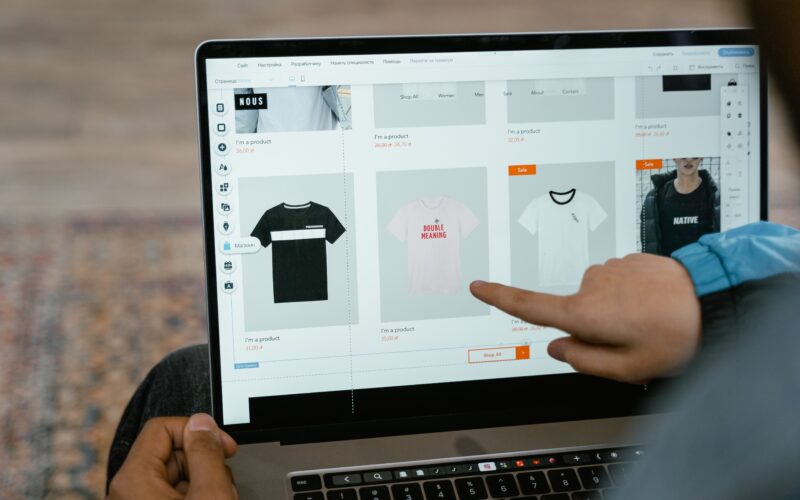
A simple way to turn your hobbies and ideas into products — without buying stock or dealing with shipping!
Have you ever seen a funny mug, T-shirt or notebook and thought:
“I could come up with something like that.”
Perhaps you could.
And today, you don’t necessarily need to buy boxes of products, rent a warehouse or spend a fortune getting started.
There’s a business model called print-on-demand, and it allows you to create products without holding stock yourself.
Even better, AI tools such as ChatGPT can help you come up with ideas, phrases and design concepts.
For seniors who enjoy being creative and are looking for a simple online project to explore, this could be an interesting possibility.
But let me make one thing clear from the start.
This isn’t a get-rich-quick scheme.
There are no guarantees that a particular design will sell.
Like any online business, it takes experimentation, patience and a willingness to learn.
The attraction is that you can start small without investing in a pile of stock that might never sell.
So, What Exactly Is Print-on-Demand-for-Seniors?
The name really tells you most of what you need to know.
With traditional retail, you buy products first and then try to sell them.
With print-on-demand, it’s the other way around.
A customer places an order first.
The print-on-demand company then produces the item, prints your design on it and sends it directly to the customer.
You don’t have to keep boxes of T-shirts in your spare bedroom.
You don’t have to package orders.
And you don’t have to make regular trips to the Post Office.
Your job is mainly to create the designs, list the products and help potential customers discover them.
The original article highlights this as one of the main attractions of the model: products are produced only after an order is placed, so you don’t have to purchase inventory in advance.
That makes it an interesting model for someone who wants to experiment without taking on a large upfront commitment.
You Don’t Have To Be An Artist!
This is probably one of the biggest misconceptions.
You might be thinking:
“But I can’t draw!”
Neither can I particularly well.
My artistic career ended somewhere around drawing houses with square windows when I was at school!
Fortunately, modern AI tools have changed what’s possible.
AI can help you brainstorm:
- Design ideas
- Short sayings
- Funny phrases
- Product themes
- Colour and style ideas
- Different variations of a concept
If you’re interested in seeing how ChatGPT can be used for other types of digital products, you might also like my guide “How Seniors Can Use ChatGPT to Create Simple Digital Products From Home.”
For example, if you enjoy gardening, you might explore ideas around:
Gardening • Retirement • Grandparents • Dogs • Fishing • Travel • Cooking
You could ask ChatGPT to brainstorm humorous sayings aimed at gardeners over 60, for example.
The AI gives you ideas.
You decide which ones are actually worth using.
That’s an important distinction.
AI is your assistant—not the business owner.
Your Hobby Could Be Your Starting Point!
Here’s where I think seniors have an interesting advantage.
You probably already have several subjects you know something about.
Think about your hobbies.
Perhaps you enjoy:
- Gardening
- Fishing
- Golf
- Walking
- Photography
- Cooking
- Sewing
- Classic cars
- Caravan holidays
- Dogs
- Cats
- Birdwatching
- Family history
You don’t need to become an expert in something completely new.
Start with something you already understand.
If you enjoy gardening, for example, you could create designs aimed specifically at gardeners.
Instead of trying to sell to everybody, you’re talking directly to people who understand the joke or appreciate the message.
That’s what a niche is.
Why A Niche Matters!
Imagine you opened an online shop selling:
“T-shirts, mugs and notebooks for everybody.”
That’s a pretty big audience!
But it’s also incredibly difficult to stand out.
Now imagine your shop focuses specifically on:
Funny gifts for retired gardeners.
Suddenly, you know exactly who you’re talking to.
Or perhaps:
Gifts for grandparents who love fishing.
Or:
Funny products for caravan and camping enthusiasts.
The audience is smaller—but that’s not necessarily a bad thing.
A smaller group of people who are genuinely interested in your subject can be much more useful than thousands of people who don’t care about it.
Simple Designs Can Work Well!
You don’t need to create elaborate artwork.
Sometimes the simplest ideas work best.
A short phrase combined with a clean design can be enough.
For example, imagine a gardening mug saying:
“Just One More Plant.”
Any keen gardener will probably understand that one immediately!
Or perhaps a retirement-themed notebook with:
“Retired — Now Taking Life Seriously.”
The idea isn’t to create something complicated.
It’s to create something that makes your target customer smile, laugh or say, “That’s me!”
AI can help you brainstorm dozens of possibilities very quickly.
Your job is to select the ones that actually have personality.
You Don’t Need To Create 100 Products!
This is another trap I’d encourage you to avoid.
You might watch a YouTube video telling you to upload hundreds of designs.
Please don’t feel you have to do that.
If you’re starting out, I’d much rather see you create 10 thoughtful designs than 100 rushed ones.
Learn how the platform works.
See which designs get attention.
Pay attention to what people seem interested in.
Then create more.
The original article makes this same important point: successful print-on-demand stores tend to develop gradually as sellers experiment and learn which designs attract interest.
That’s a much calmer approach.
And I think calm is important when you’re learning something new.
What Happens When Someone Buys?
This is the clever part of print-on-demand.
A customer sees your design and places an order.
The print-on-demand company takes care of producing the product and shipping it.
You don’t have to print anything yourself.
You don’t have to package it.
You don’t have to store it.
The platform handles the fulfilment and you receive your share of the sale.
That’s why this model can be attractive to someone working from home.
The technical and physical side of the business is largely handled for you.
Of course, that doesn’t mean it’s completely hands-off.
You’ll still need to create designs, write product descriptions, upload products and learn how the particular platform works.
But that’s very different from running a traditional shop.
You Can Start As A Learning Project!
This is how I’d approach it if I were starting from scratch.
Don’t immediately think:
“I’m going to build a huge print-on-demand business.”
Instead, think:
“I’m going to learn how this works.”
Choose one hobby.
Come up with ten design ideas.
Create a few designs.
Learn how to upload them.
See what happens.
You may discover that you enjoy the creative side.
You may discover that nobody wants your first designs!
That’s okay too.
You’ve learned something.
Then you try again.
A Few Mistakes To Avoid!
Don’t Copy Other People’s Designs
It’s perfectly fine to look at what’s popular for inspiration.
But don’t copy somebody else’s artwork, wording, logos or protected characters.
Create your own ideas.
Don’t Chase Every Trend
Trends can disappear quickly.
A design connected to a hobby you genuinely understand may have a longer life.
Don’t Upload Hundreds Of Designs Immediately
Start with a manageable collection.
Learn first.
Don’t Expect Instant Income
This is probably the most important one.
Print-on-demand can be a legitimate business model, but there’s no guarantee your products will sell.
Treat your first few months as a learning experience.
If sales eventually come along, that’s a bonus—and something you can build on.
Here’s A Simple Exercise To Try!
Before you do anything else, grab a piece of paper.
Write down three hobbies or interests you genuinely enjoy.
Under each one, write down five funny, interesting or memorable things associated with it.
For example:
Gardening
- Too many plants
- Tomatoes
- Garden tools
- Weeds
- Getting muddy
You now have the beginnings of five possible design ideas.
You could then ask ChatGPT:
“Give me 20 humorous T-shirt sayings for gardeners over 60. Keep them short, original and friendly.”
You don’t have to use the suggestions exactly as they come back.
In fact, I’d encourage you to put your own personality into them.
Could This Become A Source Of Extra Income?
It could.
But I deliberately use the word could.
There are no guarantees.
Some designs may sell.
Others may not sell at all.
Print-on-demand isn’t the only way you can turn your knowledge and ideas into something you can sell online. If writing appeals to you, you may also want to read “How Seniors Can Write and Sell an eBook Using ChatGPT.”
Over time, you may learn which subjects, phrases and designs appeal to your audience.
You can then create more products around the ideas that seem to work.
That’s how many online businesses develop.
Not overnight.
Not through some secret formula.
But through small experiments and learning what works.
If You’re New To AI, Start Here!
Perhaps you’ve been reading this thinking:
“The print-on-demand part sounds interesting, but I still don’t understand this AI business.”
That’s perfectly understandable.
You don’t need to become an AI expert before you begin.
I’ve put together a free guide specifically for people who want to understand how they can use AI in practical ways without getting buried in technical jargon.
👉 Free Report!
It’s a gentle place to start, especially if you’re still finding your way around tools such as ChatGPT.
Final Thoughts!
One of the things I like about print-on-demand is that it combines several things we’ve talked about here at Smart Seniors AI.
Your experience.
Your hobbies.
Your creativity.
And modern AI tools.
You don’t need to give up your retirement and turn yourself into a full-time entrepreneur.
You could simply experiment with a small idea in your spare time.
And print-on-demand is only one possibility. If you’d rather use AI to provide a service to other people instead of creating products yourself, you might find my article “How Seniors Can Earn Extra Income Writing Content with ChatGPT” interesting.
Perhaps you create a few gardening designs.
Or some humorous retirement mugs.
Or products aimed at fellow fishing enthusiasts.
Maybe nothing happens.
Or perhaps one of your ideas catches someone’s eye.
And if it does, you have something to build upon.
Start small. Learn as you go. And don’t be afraid to experiment.
You might be surprised where one simple idea can lead.
Warm regards,
Mike Hynes
The Seniors’ Friend
Helping seniors earn online — safely and simply


